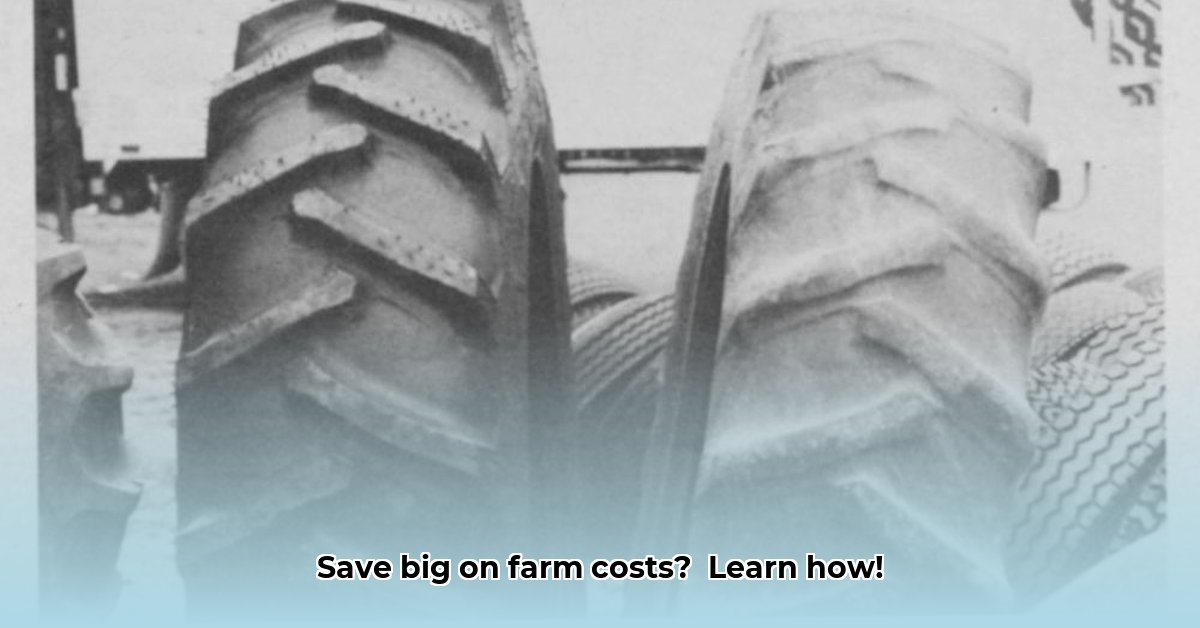
Farming is a tough business, and managing costs is a constant challenge. One often-overlooked area for significant savings is tractor tires. Retreading—giving your used tires a new life—can dramatically reduce expenses without sacrificing performance. This guide provides a practical, step-by-step approach to help you determine if retreading is the right choice for your farm. We'll explore the cost savings, environmental implications, and potential risks, empowering you to make informed decisions. For more tire options, check out tractor tire sizes.
Understanding the Cost Savings Potential
New tractor tires are a significant investment, and frequent replacements can severely impact your bottom line. Retreading offers a compelling alternative. Many farmers report savings exceeding 50% on tire costs—a substantial amount that can be reinvested in other crucial farm improvements or directly increase your profit margin. Isn't that extra money worth exploring the option?
How Retreading Works: A Second Life for Your Tires
Retreading isn't a complex process. It involves carefully removing the old tread from a used tire, then applying a fresh layer of high-quality rubber and curing it to create a durable new tread. It’s essentially a tire "engine rebuild," offering a cost-effective way to extend the life of your existing tires.
Retread Tires: Weighing the Pros and Cons
A balanced assessment is critical. Here's a comparison of retreaded versus new tires:
| Feature | Pros | Cons |
|---|---|---|
| Cost | Significantly lower than new tires, potentially saving thousands of dollars over the tire's lifespan. | Upfront retreading costs must be considered. |
| Sustainability | Reduces tire waste; contributes to a more environmentally friendly farming practice. | The retreading process uses resources and energy, although generally less than new tire production. |
| Performance | Can deliver comparable performance to new tires, especially with reputable retreaders. | Performance may slightly vary; quality depends heavily on the retreader's craftsmanship. |
| Availability | Availability varies geographically; may be limited depending on your location and tire size. | Finding a reputable retreader may require research. |
A Step-by-Step Guide to Retreading Your Tractor Tires
Ready to explore retreading? This six-step process ensures a smooth transition:
- Identify Local Retreaders: Research local services, check online reviews, and speak with other farmers about their experiences. Choosing a reputable retreader is paramount.
- Thoroughly Inspect Your Tires: Before contacting a retreader, carefully examine your tires for damage that may prevent retreading.
- Obtain Multiple Quotes: Get quotes from several retreaders, comparing pricing, turnaround times, and the rubber quality used. Negotiation is often possible.
- Implement a Pilot Program: Start with a set of tires on less critical equipment to test their performance before committing to retreading your entire fleet.
- Monitor Performance Closely: Track fuel efficiency, tire lifespan, and overall performance after retreading.
- Analyze the Results: Compare retreaded tire costs against new tire costs and evaluate their performance relative to new tires.
Understanding and Managing Potential Risks
A primary concern with retreaded tires is potential performance inconsistency. Selecting a reputable retreader with robust quality control is crucial to mitigate this risk. Consider diversifying your retreading sources to ensure a reliable supply and avoid delays.
The Environmental Impact: Sustainability Considerations
While retreaded tires offer a more sustainable alternative to continuously buying new tires, the entire process has an environmental footprint. The manufacturing of new rubber and energy consumption during retreading contribute to this impact. Ongoing research compares the overall environmental impact of retreading versus purchasing new tires. The long-term sustainability of retreading remains an area of ongoing investigation.
Choosing the Right Retreaded Tractor Tires for Sustainable Farming
Successful retreading requires careful consideration of your specific needs.
Understanding Your Requirements: Terrain, Climate, and Tractor
Before selecting retreads, assess your farming operation. What's your terrain like? Clay soils? Rocky fields? Your climate also impacts tire performance and lifespan. Understanding your tractor's size and horsepower dictates the necessary tire size and load capacity. Matching these factors to the right tire ensures optimal performance.
Selecting the Best Retreads: A Detailed Guide
- Evaluate Tire Condition: A qualified tire professional should assess the condition of your existing tires to determine their suitability for retreading.
- Choose a Reputable Retreader: Prioritize a reliable retreader who uses high-quality materials and processes. Check references and their reputation thoroughly.
- Inspect Retreads Carefully: Before mounting, carefully inspect the retreaded tires for any flaws, such as uneven wear, cracks, or sidewall damage.
- Ensure Proper Mounting and Inflation: Professional mounting is essential, and correct inflation pressure is critical for performance and longevity. Consider a tire pressure monitoring system (TPMS).
- Develop a Tire Maintenance Plan: Regular tire inspections, including frequent inflation checks, are vital for preventing major issues and extending tire life.
The Sustainability Advantage: Soil Health and Fuel Efficiency
Properly inflated retreaded tires contribute to sustainable farming by reducing soil compaction, which in turn improves yields, reduces fuel consumption, and ultimately lowers your environmental impact.
Addressing Potential Risks: A Practical Approach
The potential for poorly retreaded tires to fail unexpectedly is a valid concern. Mitigating this risk involves selecting a trusted retreader and diligently inspecting the tires before use.
Beyond Retreads: Future Tire Technologies
While retreading provides a significant advantage, explore advanced tire technologies like IF (Increased Flexibility) and VF (Very High Flexibility) tires. These offer lower inflation pressures, further minimizing soil compaction, but usually come at a higher initial cost.